How Heavy Is 10 Ounces? 13 Everyday Weight Comparisons
How heavy is 10 ounces? It is a common question when you are cooking, shopping, mailing a package, or trying to estimate the weight of an everyday item without using a scale. Ten ounces equals approximately 283.5 grams, 0.625 pounds, or 0.2835 kilograms, making it a relatively light but noticeable amount of weight.
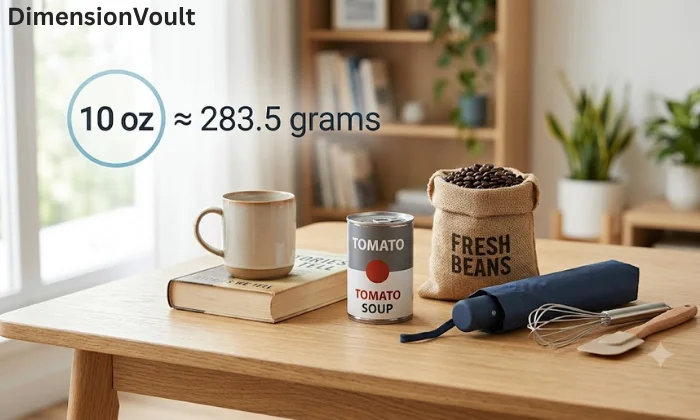
The easiest way to understand 10 ounces is by comparing it to familiar objects you encounter every day. In this guide, you’ll learn the equivalent measurements of 10 ounces, understand the difference between ounces and fluid ounces, and discover 13 everyday items that weigh about 10 ounces to help you visualize this weight more accurately.
How Heavy Is 10 Ounces?
Ten ounces (10 oz) is a unit of weight in the U.S. customary and imperial measurement systems. While the number may seem small, it represents a noticeable amount of weight that you can comfortably hold in one hand. Whether you’re following a recipe, comparing product weights, shipping a package, or simply curious, understanding how heavy 10 ounces is can make everyday measurements much easier.
To put it into perspective, 10 ounces equals 283.5 grams, making it slightly over a quarter of a kilogram. It’s also less than one pound, but heavy enough to be felt when carrying household items, groceries, or small electronic devices.
Convert 10 oz to Grams
- If you are using the metric system, 10 ounces is equal to approximately 283.5 grams.
- Conversion Formula: 10 oz × 28.35 = 283.5 g
- This conversion is especially useful for cooking, baking, nutrition labels, and international measurements where grams are the standard unit.
Convert 10 oz to Pounds
- Since 16 ounces make 1 pound, 10 ounces is equal to:
- 10 oz ÷ 16 = 0.625 pounds
- So, 10 ounces equals 0.625 lb, or five-eighths of a pound.
Convert 10 oz to Kilograms
- To convert ounces into kilograms:
- 10 oz × 0.02835 = 0.2835 kg
- Therefore, 10 ounces is approximately 0.284 kilograms.
Quick Weight Conversion Table
If you need to convert 10 ounces into other units of measurement, use the table below for a quick reference.
| Unit | Equivalent of 10 Ounces |
| Ounces (oz) | 10 oz |
| Grams (g) | 283.5 g |
| Kilograms (kg) | 0.2835 kg |
| Pounds (lb) | 0.625 lb |
| Milligrams (mg) | 283,500 mg |
These conversions are helpful for cooking, shipping, fitness, science, and international measurements where metric units are commonly used.
Is an Ounce the Same as a Fluid Ounce?
No, an ounce (oz) and a fluid ounce (fl oz) are not the same measurement, even though they share a similar name.An ounce (oz) measures weight, indicating how heavy an object is. You’ll commonly see it used for foods, parcels, jewellery, and other physical items.A fluid ounce (fl oz), on the other hand, measures volume, which tells you how much space a liquid occupies. It’s commonly used for beverages, milk, juice, shampoo, cooking oil, and other liquids.
For example:- A 10-ounce bag of coffee beans weighs exactly 10 ounces.
- A 10-fluid-ounce bottle of juice contains 10 fluid ounces of liquid, but its actual weight depends on the liquid’s density.
Although 10 fluid ounces of water weighs approximately 10 ounces under standard conditions, this relationship doesn’t apply to all liquids. Denser liquids such as honey or syrup weigh more than the same volume of water, while lighter liquids like some oils weigh less.
| Ounce (oz) | Fluid Ounce (fl oz) |
| Measures weight | Measures liquid volume |
| Used for solid objects | Used for liquids |
| Equivalent to 28.35 grams | Equivalent to about 29.57 millilitres (US fl oz) |
Understanding the difference helps prevent mistakes when following recipes, measuring ingredients, or comparing product labels.
What Does 10 Ounces Feel Like?
If you have never weighed something on a scale, 10 ounces feels moderately light. It is heavier than a smartphone but still easy to hold with one hand for an extended period.
Imagine picking up a small kitchen item, a compact book, or a filled coffee mug—they are all in a similar weight range. While 10 ounces isn’t heavy enough to cause strain, it’s substantial enough that you can clearly notice its weight.
This is why 10 ounces is a common weight for everyday household products, packaged foods, travel accessories, and small consumer items. Once you become familiar with how 10 ounces feels, estimating similar weights without a scale becomes much easier.
In the next section, we will compare 10 ounces with real-life everyday objects to give you an even better sense of its weight.
13 Everyday Things That Weigh About 10 Ounces
A Standard Can of Soup
A standard can of condensed soup is one of the easiest ways to picture 10 ounces because many popular brands sell their soup in 10.5-ounce cans. That means a full can weighs almost exactly the same as 10 ounces (283.5 grams), making it a reliable everyday comparison. Whether it’s tomato, chicken noodle, or mushroom soup, the can is compact enough to hold comfortably in one hand while still having a noticeable weight.
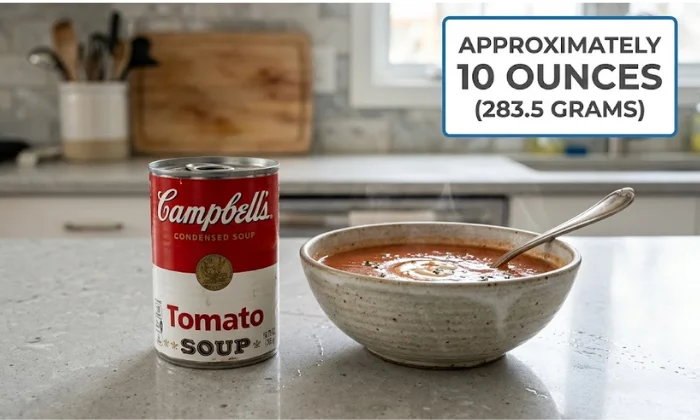
If you’ve ever picked up a can of soup from a supermarket shelf or your kitchen cupboard, you’ve already experienced what approximately 10 ounces feels like. The exact weight may differ slightly depending on the recipe and packaging, but most condensed soup cans stay very close to this measurement. Since canned soup is a common household item, it’s one of the most practical examples for visualising how heavy 10 ounces really is.
A Medium Ceramic Coffee Mug
An empty medium-sized ceramic coffee mug typically weighs between 9 and 11 ounces, making it an excellent comparison for understanding 10 ounces. Unlike lightweight plastic or paper cups, ceramic mugs are made from dense material, giving them a solid feel without being too heavy. Most people use one every day, making this an easy object to imagine.
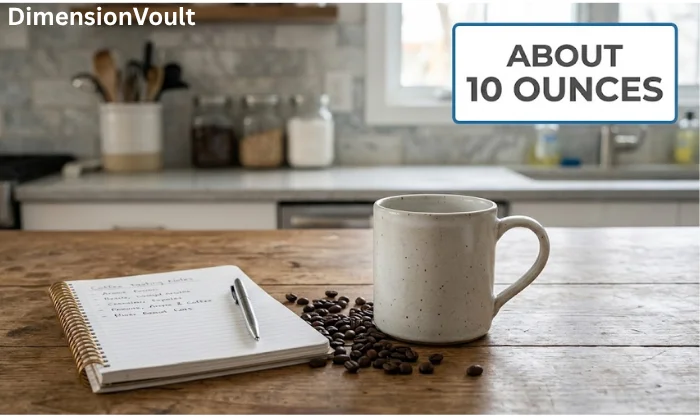
The weight of a ceramic mug can vary depending on its thickness, design, and manufacturer, but many standard mugs fall very close to the 10-ounce range when empty. Holding one in your hand gives you a realistic sense of how much 10 ounces weighs. Because coffee mugs are found in nearly every home and office, they’re a familiar reference that helps people estimate this weight without needing a scale.
A Paperback Novel
A typical paperback novel with roughly 250 to 350 pages often weighs close to 10 ounces, depending on the paper quality and cover thickness. Books of this size are lightweight enough to carry in a backpack or handbag but heavy enough that you’ll clearly notice them when holding them for an extended period.
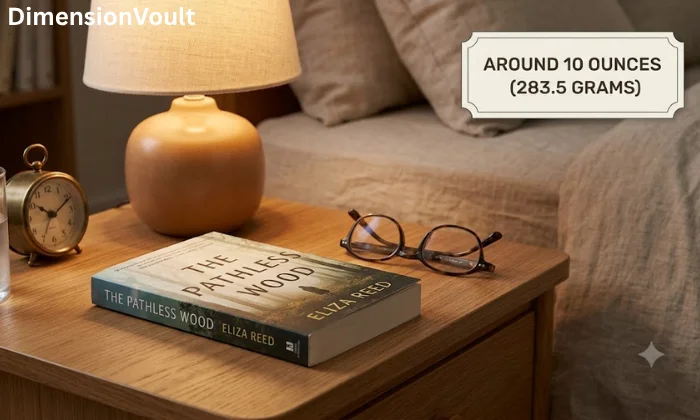
If you’ve ever read a bestselling novel on a flight or during your commute, you’ve likely held something weighing about 10 ounces. While larger novels can weigh more and shorter books less, many standard paperbacks stay within this range. That’s why a paperback book is a simple and effective way to picture the weight of 10 ounces in everyday life.
A Small Jar of Peanut Butter
A small jar of peanut butter is another excellent example of an item weighing around 10 ounces. Many manufacturers package peanut butter in 10-ounce jars, making them easy to recognise in supermarkets. Combined with its glass or plastic container, it feels compact yet noticeably weighty when picked up.
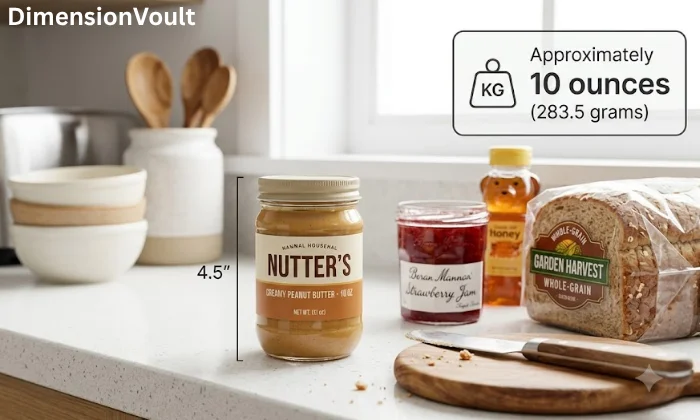
Whether you’re making breakfast or packing lunch, you’ve probably handled a jar similar to this. Although some brands offer larger or smaller sizes, the 10-ounce version provides a practical comparison because the labelled weight is easy to verify. Its everyday use makes it one of the simplest ways to understand what 10 ounces feels like without using a measuring scale.
A Bag of Frozen Vegetables
Many grocery stores sell frozen vegetables in 10-ounce bags, including vegetables such as broccoli, mixed vegetables, peas, or spinach. Because the package weight is clearly printed on the label, it’s one of the most accurate examples of what 10 ounces looks and feels like.
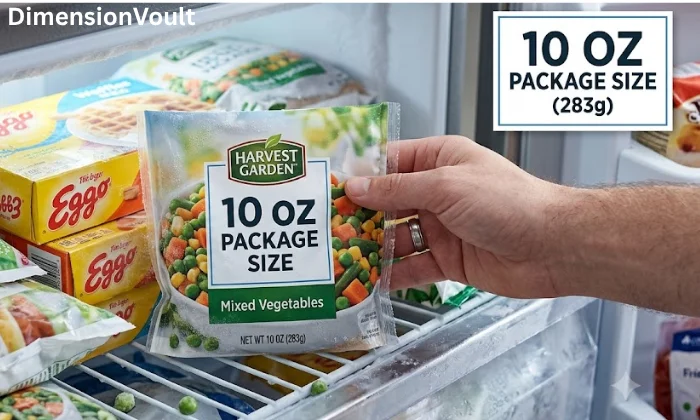
A sealed bag of frozen vegetables has enough weight to feel substantial without being difficult to carry. Since these products are common in household freezers, they’re easy for most people to recognise. Keep in mind that the total weight includes the vegetables themselves, and slight manufacturing differences are normal, but most packages remain very close to the advertised 10 ounces.
A Pair of Flip-Flops
A standard pair of adult rubber flip-flops often weighs around 10 ounces, although the exact amount depends on the size and material. Lightweight footwear is designed for comfort, making flip-flops an excellent example of an object that isn’t heavy but still has a noticeable weight.

Most people own a pair of flip-flops for trips to the beach, swimming pool, or around the house. Picking them up together gives a surprisingly accurate sense of 10 ounces. While thicker foam or premium materials may increase the weight slightly, many everyday flip-flops remain close to this measurement.
A Kitchen Chef’s Knife
A quality 8-inch chef’s knife often weighs around 10 ounces, depending on the type of steel and handle material. Professional kitchen knives are intentionally balanced to provide better control while chopping, slicing, and dicing ingredients.
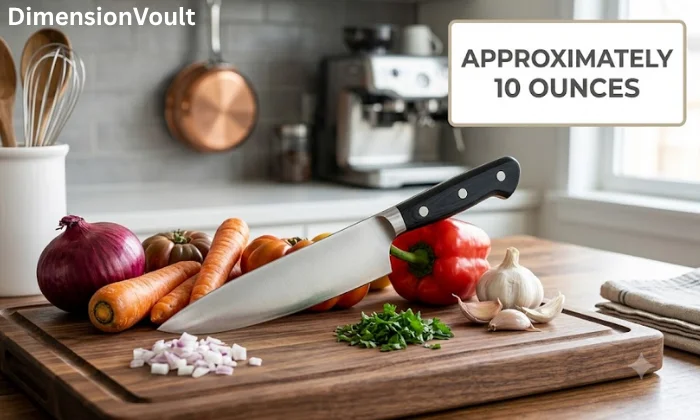
When you hold a chef’s knife by its handle, you’ll notice that it feels sturdy without being overly heavy. This balanced weight closely matches 10 ounces, making it a useful household example. Premium forged knives may weigh a little more, while stamped blades can weigh slightly less, but many standard chef’s knives stay near this range.
A Pack of Sliced Cheese
Many manufacturers sell packs of sliced cheese in 10-ounce packages, making them another accurate everyday comparison. Since the weight is printed directly on the packaging, shoppers can easily verify that the product weighs about 10 ounces before opening it.
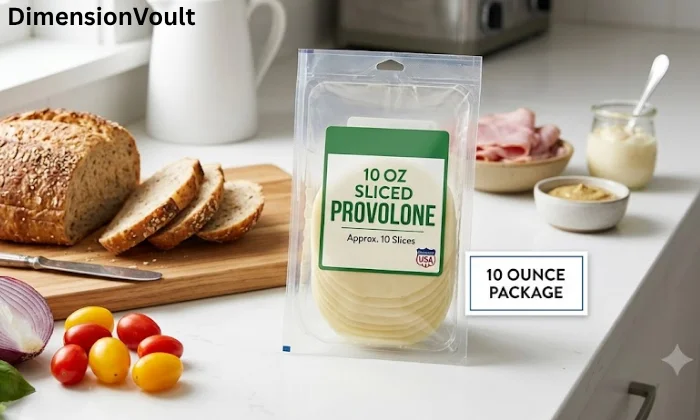
A sealed cheese pack feels moderately heavy because of the density of the cheese inside. Whether you’re preparing sandwiches or snacks, you’ve probably handled a package close to this weight. Although different brands may vary slightly, the 10-ounce size remains common, making it a practical way to understand how heavy this measurement is.
A Travel Toiletry Bag
A travel toiletry bag containing a toothbrush, toothpaste, a small deodorant, and a few personal care essentials often weighs around 10 ounces. It’s light enough to fit inside hand luggage while still feeling substantial when carried.

The exact weight depends on what you pack, but a basic travel kit usually stays close to the 10-ounce mark. If you’ve ever packed toiletries for a weekend trip or flight, you’ve likely carried something weighing about this much. This everyday travel item provides a realistic and easy-to-understand comparison that helps readers picture the weight of 10 ounces without using a scale.
Why Everyday Weight Comparisons Are Helpful
Understanding a weight like 10 ounces can be difficult if you only look at the number. Most people don’t regularly use a scale, so it’s much easier to relate the measurement to familiar objects they see and handle every day. Comparing 10 ounces to common household items, groceries, books, or kitchen products creates a mental reference that makes the weight easier to remember.
These comparisons are useful in many everyday situations, such as shopping, cooking, mailing packages, travelling, or estimating the weight of an item when a scale isn’t available. Instead of guessing, you can think of an object that weighs about 10 ounces (283.5 grams) and make a much more accurate estimate. This practical approach helps save time and improves your understanding of common weight measurements.
FAQs
Conclusion
Understanding how heavy is 10 ounces becomes much easier when you convert it into familiar measurements and compare it with everyday objects. As we have seen, 10 ounces equals approximately 283.5 grams, 0.625 pounds, or 0.2835 kilograms, making it a light but noticeable amount of weight for many household items.
The easiest way to visualize 10 ounces is by thinking of common objects like a standard can of soup, a medium ceramic coffee mug, or a paperback novel. Using these real-life comparisons helps you quickly estimate the weight of 10 ounces without needing a scale, making everyday tasks like shopping, cooking, packing, and shipping much more convenient.
